


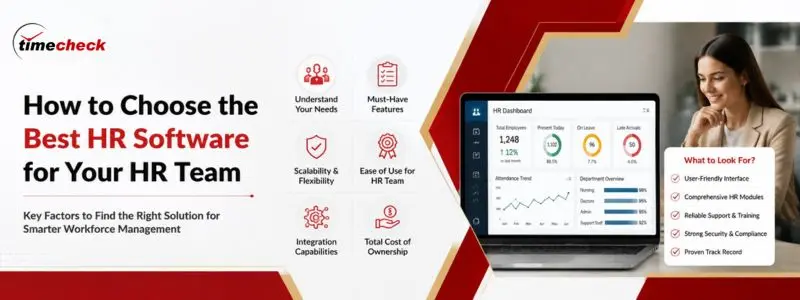
Many HR teams do not struggle because they lack employee data. Their challenge is that this data is spread across spreadsheets, attendance machines, emails, payroll systems, and other disconnected tools. For an organisation with multiple locations, shift-based employees, or a growing workforce, choosing HR software is not simply a matter of purchasing another digital platform. The decision directly impacts attendance accuracy, payroll processing, employee transparency, compliance reporting, and everyday HR operations. The Best HR software for HR teams should address real operational challenges by reducing manual tracking, improving workforce visibility, and enabling HR managers to make faster decisions based on reliable information. For companies with 100 or more employees, distributed teams, or round-the-clock operations, selecting software requires a detailed assessment of business requirements rather than just comparing available features. The typical users of TimeCheck include HR managers, IT managers, operations heads, and administrators responsible for managing workforce complexity across industries such as IT, manufacturing, healthcare, logistics, and education.
What Is HR Software?
HR software is a digital system that helps organisations manage employee-related processes such as attendance tracking, leave management, shift scheduling, overtime management, reporting, and workforce administration.
Modern HR software provides a central platform where HR teams can manage employee data and operational processes without depending on manual spreadsheets or separate systems.
For organisations with complex workforce requirements, HR software helps create:
- Accurate employee attendance records
- Faster leave and approval workflows
- Better shift planning
- Reliable payroll inputs
- Real-time workforce visibility
- Audit-ready reports
The purpose of HR software goes beyond automation. It helps HR and management teams make workforce decisions with confidence by using accurate and reliable information.
Common Challenges HR Teams Face When Selecting HR Software
Managing Attendance Across Multiple Locations
Many companies still use separate attendance systems for different branches or departments.
This creates problems such as:
- Delayed attendance reporting
- Difficulty monitoring employee movement
- Inconsistent attendance policies
- Manual consolidation work
For example, a business operating factories across multiple locations may spend several days collecting attendance reports before payroll processing begins.
An effective HR software system should provide access to attendance information from all locations through a centralised platform.
Managing a Shift-Based Workforce
In industries such as manufacturing, healthcare, logistics, and IT services, employees often work across different shifts.
Common challenges include:
- Incorrect shift allocation
- Overtime calculation issues
- Poor workforce planning
- Last-minute scheduling problems
HR teams need software that supports real workforce conditions rather than simply maintaining basic employee records.
Compliance and Payroll Data Accuracy
Payroll errors frequently occur because HR teams depend on incomplete attendance information.
Common problems include:
- Incorrect overtime records
- Missing attendance data
- Manual approval delays
- Inconsistent leave calculations
HR software should create reliable records that support payroll processing and compliance requirements.
Lack of Workforce Visibility
Leadership teams need quick answers to questions such as:
- Who is available today?
- How many employees are absent?
- Where are overtime expenses increasing?
- Which locations require additional workforce support?
Without real-time visibility, HR decisions become reactive rather than planned.
Why Traditional HR Management Methods Fail
Many organisations still use spreadsheets, manual registers, emails, and separate attendance tools.
These methods create several operational limitations:
| Traditional Approach | Automated HR Software Approach |
|---|---|
| Spreadsheet-based employee tracking | Centralised employee information |
| Manual attendance verification | Real-time attendance visibility |
| Email-based leave approvals | Automated approval workflows |
| Manual overtime calculation | Accurate overtime records |
| Separate branch reports | Unified workforce dashboard |
| Delayed reporting | Instant workforce insights |
Manual methods may work for small teams, but they become difficult to manage as employee numbers, locations, and operational complexity increase.
The main problem is not only the time involved. It is also the risk of making incorrect decisions due to outdated information.
How Modern HR Software Solves These Problems
The right HR software connects daily workforce operations with accurate data.
Centralised Attendance Management
Instead of collecting attendance records manually, HR teams can access workforce data through a single platform.
Business impact:
- Faster payroll preparation
- Reduced attendance disputes
- Better employee transparency
- Improved reporting accuracy
Automated Leave and Approval Workflows
Manual leave management often creates unnecessary communication between employees, managers, and HR teams.
Modern systems help by providing:
- Digital leave requests
- Approval tracking
- Leave balance visibility
- Faster decision-making
Shift and Workforce Planning
HR software helps managers plan resources more effectively when organisations operate multiple shifts.
Benefits include:
- Better employee allocation
- Reduced scheduling conflicts
- Improved operational continuity
Data-Driven HR Decisions
HR leaders need more than attendance records; they need actionable insights.
Reports can help identify:
- Attendance patterns
- Overtime trends
- Workforce availability
- Department-level issues
This supports better workforce planning.
Key Factors to Consider Before Choosing Best HR Software for HR Teams
Determine Your Workforce Requirements
Before evaluating software providers, define:
- Number of employees
- Number of locations
- Shift requirements
- Existing attendance systems
- Payroll integration needs
A solution designed for a 50-person office may not be suitable for a distributed enterprise workforce.
Evaluate Integration Capabilities
Check how well the system connects with your existing tools and platforms.
Look for:
- Direct integrations
- APIs
- Support for common file formats
Ensure that the integration process is simple and does not require extensive custom development. Testing the setup in a real operating environment before making a final decision can help avoid future issues.
HR software should be compatible with the business systems already in use.
Check compatibility with:
- Attendance devices
- Payroll systems
- ERP platforms
- Existing HR processes
For organisations using biometric attendance systems, hardware and software compatibility is an important factor when selecting a solution.
Review Reporting and Analytics Features
A good HR software solution should answer operational questions quickly.
Look for:
- Attendance reports
- Overtime reports
- Leave reports
- Employee status reports
Consider Scalability
The software should support business growth.
Ask:
- Can it handle more employees?
- Can additional locations be added?
- Can workflows adapt when policies change?
Check Vendor Experience and Support
HR systems manage important employee information, so choosing a reliable vendor is essential.
Evaluate:
- Industry experience
- Customer support
- Implementation process
- Product updates
TimeCheck focuses on workforce automation, drawing on more than 20 years of market experience, and aims to simplify attendance, leave, and shift management for organisations.
HR Software Selection Checklist
Before finalising an HR software solution, HR teams should evaluate the following areas:
| Evaluation Area | Questions to Ask |
|---|---|
| Workforce Size | Can it support current and future employees? |
| Attendance | Does it provide accurate real-time tracking? |
| Shift Management | Can it handle complex shift schedules? |
| Integration | Does it connect with existing systems? |
| Reporting | Are management reports easily available? |
| Security | Is employee data protected? |
Best Practices for Implementing HR Software
Start With Clear Objectives
Define the problems that need to be solved before beginning implementation.
Examples:
- Reduce attendance errors
- Improve payroll accuracy
- Simplify leave management
- Improve workforce visibility
Involve Key Users Early
Successful implementation requires input from:
- HR teams
- Operations managers
- IT teams
- Employees
Different users experience different challenges, so involving them early helps create a smoother implementation process.
Train Teams Properly
Even the best HR software can fail if users do not understand how to use the system effectively.
Provide:
- User training
- Process documentation
- Support channels
Measure Business Outcomes
Track improvements after implementation:
- Time saved in HR operations
- Reduction in attendance disputes
- Faster reporting
- Better workforce planning

